Digital PR Campaigns: A Complete Step-by-Step Guide With Campaign Types and Examples
Digital PR earns coverage and links from news sites by giving journalists a story worth telling. Here is how a campaign works, step by step, and how to measure it.

Ranksul Team
SEO & Link Building Team
What digital PR is
Digital PR is public relations aimed at online publications. Instead of chasing print features, it targets news sites, industry media and blogs that link to their sources. Done well, it builds brand awareness and some of the strongest backlinks a site can earn.
Ranksul's digital PR services combine story-led campaigns with press release distribution and placements on news websites.
Digital PR outreach best practices
The habits that separate outreach journalists answer from outreach they delete.
- Pitch a story, not your brand: lead with the finding or the news angle
- Target writers who covered the topic in the last few months, not whole outlets
- Personalise the first line to the journalist's recent work
- Keep the pitch under 150 words, with the data, charts and expert ready to share
- Send when the writer's news cycle allows, and respect embargoes
- Follow up once, with something new, then stop
- Answer requests within hours; slow replies lose the story
- Track every pitch, reply and piece of coverage so the next campaign is better
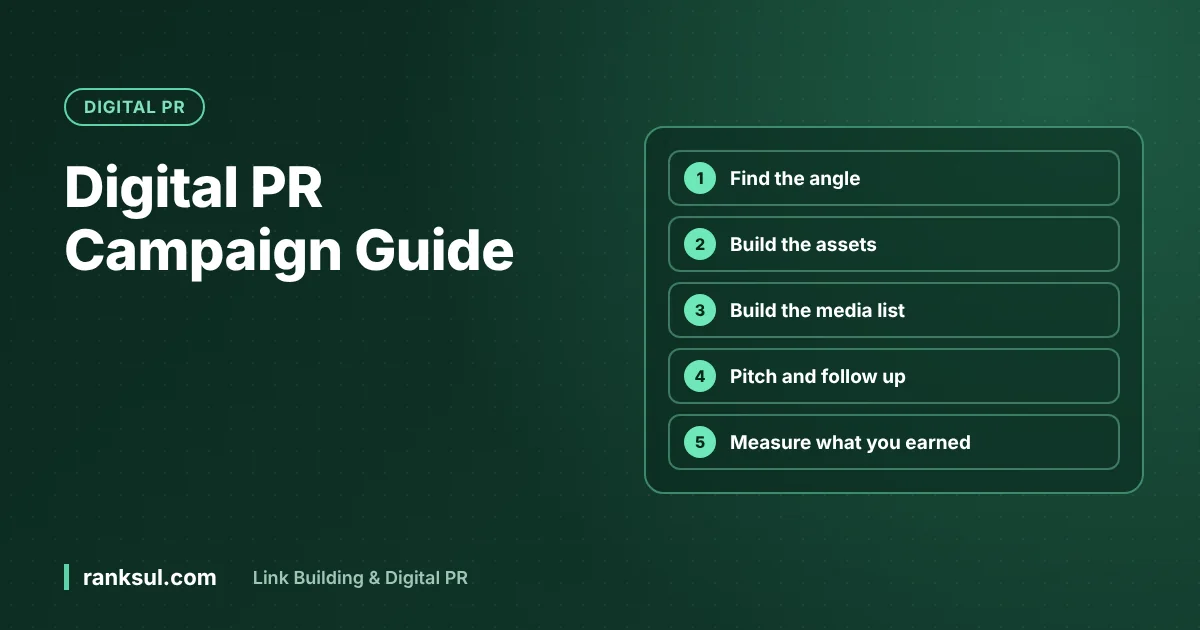
Step 1: find the angle
Journalists cover what their readers care about: new data, surprising trends, expert opinions on current news and practical guides. Start from the publications you want to be in and ask what story would genuinely interest their audience, then find how your company can provide it.
- Original data from your product, customers or a survey
- Expert commentary on breaking industry news
- Rankings, indexes or studies with clear methodology
- Company milestones that are genuinely newsworthy
Step 2: build the assets
Create everything a journalist needs to write the story quickly: a short summary, the key findings, charts, methodology, quotes and a page on your site that hosts the full study. That page is what journalists link to, so make it fast, clear and easy to cite.
Add structured data where it fits, and make sure the page is indexed, which you can confirm with the URL Inspection tool in Google Search Console.
Step 3: build the media list
List the journalists and editors who cover your topic, not just the biggest outlets. A relevant regional site or trade publication often gives more value than a general national site that ignores the pitch. Group them by beat and country, and note what each recently wrote.
For markets where you need guaranteed visibility, our marketplace lists news publishers in many countries, including USA, UK and the GCC.
Step 4: pitch and follow up
Write short, personal pitches: one line on why it matters to their readers, the key finding, and what you can provide. Send at a time that suits their news cycle and follow up once, politely, with something new. Respect embargoes and be quick to answer questions.
Earned coverage is never guaranteed. Pair it with a press release for broad syndication and sponsored articles on chosen publications, so every campaign delivers visible results.
Step 5: measure what you earned
Track each piece of coverage: the publication, whether it links and with what attribute, and the traffic it sends. Watch branded search and referral visits in Google Search Console and analytics, and new referring domains in Ahrefs or Semrush. Over a few campaigns you will learn which angles your industry's media prefer.
Types of digital PR campaign
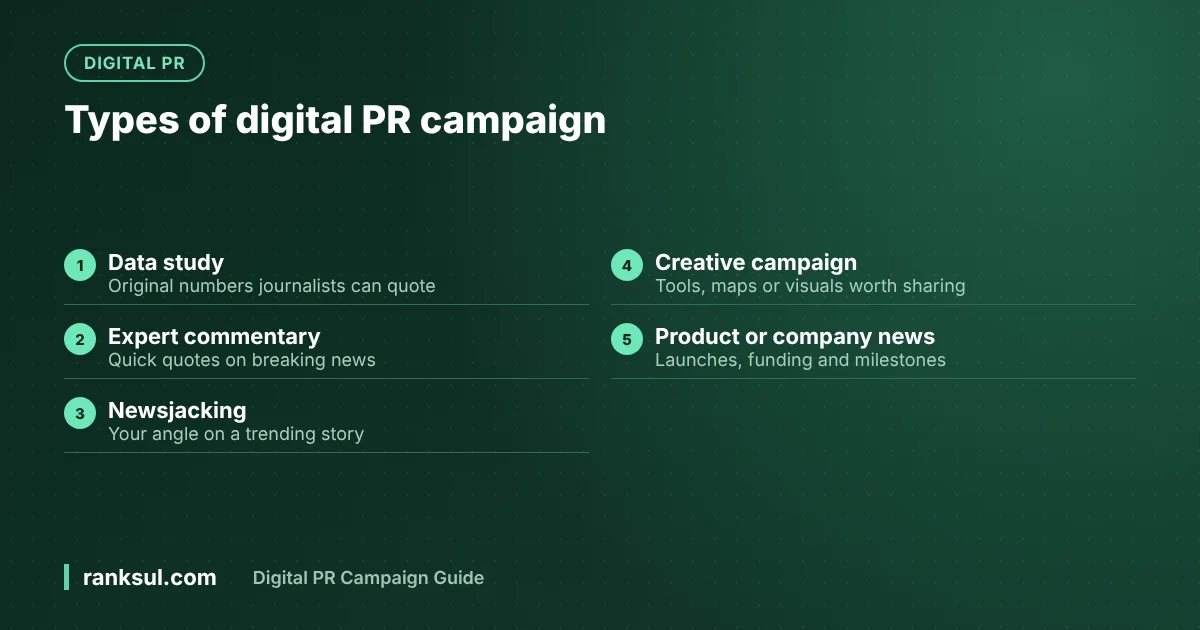
Data-led campaigns
Original research, surveys or analysis of public data with a clear headline finding ("prices rose 30% in a year"). The most reliable campaign type for links because journalists need numbers. Our Link Building Price Index is an example built from marketplace data.
Reactive PR (newsjacking)
Fast expert comment on breaking news in your industry, sent to journalists covering it within hours. Small effort per story, steady results over time.
Expert tips and commentary
Evergreen advice from a named expert, offered to journalists writing seasonal or service stories, often through journalist request platforms such as Qwoted, Featured or Source of Sources.
Tools and indexes
Calculators, rankings and indexes that writers keep linking to over time, such as a city cost index or a price tracker.
Creative and stunt campaigns
Visual or surprising ideas that earn coverage through novelty. High potential, high risk; best for brands with consumer appeal.
Setting goals before ideas
Decide what the campaign is for: links to a specific page, coverage in a specific publication type, brand awareness in a new market, or trust signals for AI and search. The goal decides the angle and the targets. A campaign for links to a SaaS pricing page needs tech and business journalists; a campaign for local brand awareness needs local news.
A pitch email that gets opened
Subject: the finding, not your brand. For example, a subject in the form "[Group] now spend [X]% of income on [cost], new data shows" tells the journalist the story before they open the email.
Body: one line on the finding, two or three supporting numbers, one line on why it matters to their readers, a link to the full data and charts, and an offer of an expert quote. Keep it under 150 words, personalise the first line to the journalist's recent work, and send one follow-up a few days later with a new angle or number.
Common reasons campaigns fail
- The story is about the brand, not about something readers care about
- The headline finding is weak or not surprising
- The data has no clear method or sample, so journalists cannot trust it
- The media list is too broad and not matched to the topic
- Timing clashes with bigger news, or misses the seasonal window
- The landing page is thin, so journalists have nothing to link to
Digital PR and AI search
Coverage on respected publications does double duty now: it earns links and it places your brand in the sources AI assistants read and cite. Brands mentioned consistently in trusted coverage are more likely to be named in AI answers about their category.
Building a media list
Find journalists who have written about your topic recently: search news for the topic and note the authors, check who covered your competitors, and follow relevant writers on social media. Media databases speed this up. Record name, publication, beat, a recent article and contact details. Twenty well-matched journalists beat two hundred random ones.
Running a data campaign: a 6-week timeline
- Week 1: brainstorm angles, check what has been covered, pick one with a clear headline
- Week 2: collect and analyse data (survey, public data or your own), check the method
- Week 3: write the landing page with findings, method and charts
- Week 4: build the media list and write pitches for national, trade and regional angles
- Week 5: pitch, follow up once, respond quickly to requests
- Week 6: track coverage, reclaim unlinked mentions, pitch regional cuts of the data
Digital PR strategies and tactics that work
The digital PR tactics behind most successful campaigns fall into a few repeatable patterns.
- Original data: a survey, index or analysis journalists can quote
- Reactive commentary: an expert view on a story already in the news
- Expert tips: practical advice for consumer and trade press
- Tools and calculators that other sites link to as a resource
- Local angles: national data broken down by city or region
Digital PR examples to learn from
The best digital PR campaigns share three traits: a finding that surprises, a clear link to the brand’s expertise and assets journalists can use straight away (charts, quotes, data tables). When you study digital PR campaign examples, look at which outlets covered them and which pages the links pointed to, not only how many links they earned.
What message pull-through means in PR reporting
Message pull-through is how much of what you wanted to say actually appears in the coverage. Before a campaign, you set two or three key messages. Afterwards, you check each article for them: was the brand named, was the key finding quoted, was your spokesperson cited, and does it link to the right page?
It is usually reported as the share of articles that carry at least one key message, alongside coverage count and links. High coverage with low pull-through means journalists used your story but not your message, a sign the pitch or the data needs sharpening.
Media outreach services: what they include
A media outreach service handles the pitching for you. Most include building a media list for your topic and markets, writing the pitch and press materials, sending and following up, handling journalist requests and reporting coverage, links and pull-through. Pricing is usually a monthly retainer or a fee per campaign, and earned coverage is not guaranteed.
If you need guaranteed visibility on specific sites, combine outreach with press release distribution or news site placements. Our digital PR services do both.
How to amplify the reach of a digital PR campaign
Coverage on day one is the start. These steps keep a campaign earning links for months.
- Pitch regional and trade versions of the data after the national story runs
- Ask sites that mentioned you without a link to add one
- Share the coverage on LinkedIn and with customers, partners and your email list
- Link to the campaign page from related pages on your own site
- Update the data next year and pitch the new edition to the same writers
Frequently asked questions
How is digital PR different from link building?
Link building focuses on placements; digital PR focuses on stories that earn coverage. Many campaigns use both. See our comparison of press release distribution and authority.
How long does a digital PR campaign take?
Usually four to eight weeks from idea to coverage, longer for original research.
Are digital PR links Do-Follow?
Many editorial links are, but news sites set their own policies. Brand mentions and referral traffic have value either way.
How much does a digital PR campaign cost?
From very little for reactive comment done in-house to tens of thousands for agency-run data campaigns. Judge by coverage and links earned per campaign across several campaigns.
How many links does a digital PR campaign earn?
It varies widely: some campaigns earn none, strong ones earn dozens. That uncertainty is why many brands combine digital PR with predictable placements.
Can small businesses do digital PR?
Yes. Local data, expert comment and genuine local news are realistic starting points that do not need a big budget.
What does message pull-through mean in reporting?
It measures how many of your key messages appear in the coverage a campaign earns, usually as the share of articles that include at least one of them. It shows whether journalists told your story, not just whether they wrote about you.
What are digital PR outreach best practices?
Pitch a story rather than your brand, target writers who recently covered the topic, personalise and shorten the pitch, have data and experts ready, follow up once with something new and reply to requests quickly.
Want Ranksul (ranksul.com) to execute this strategy for your domain?
Book a complimentary strategy call. We will audit your current topical authority, editorial backlinks, and content clusters.